Prefabricated, modular, traditional: these words are often confused. Here is what really changes in a project, without any claim that one is superior.
Prefabricated home, modular home, traditional construction: these three expressions come up constantly in a building project, and they are often used as if they meant the same thing. They do not. Here is what changes in practice depending on the method chosen, without trying to prove that one method is superior to the other.
Understanding the subject
Traditional construction refers to a building constructed entirely on its final plot, from earthworks to roof. The various trades (masonry, carpentry, roofing, electrics, plumbing, finishes) work one after the other on the same site, each having to wait until the previous one has finished before starting its own work. It is the oldest and most widespread method of construction, and it remains the reference for a large share of detached houses.
Prefabricated home is a broader term: it covers various off-site construction methods, meaning that part of the work is carried out somewhere other than on the final plot, in a workshop or factory, before transport and assembly on site. This ranges from prefabricated panels assembled on site to kit structures, including modular construction itself. Off-site construction is not a recent concept: the principle has existed since the Industrial Revolution, but digital design methods have considerably broadened what can be built in a workshop.
Going further
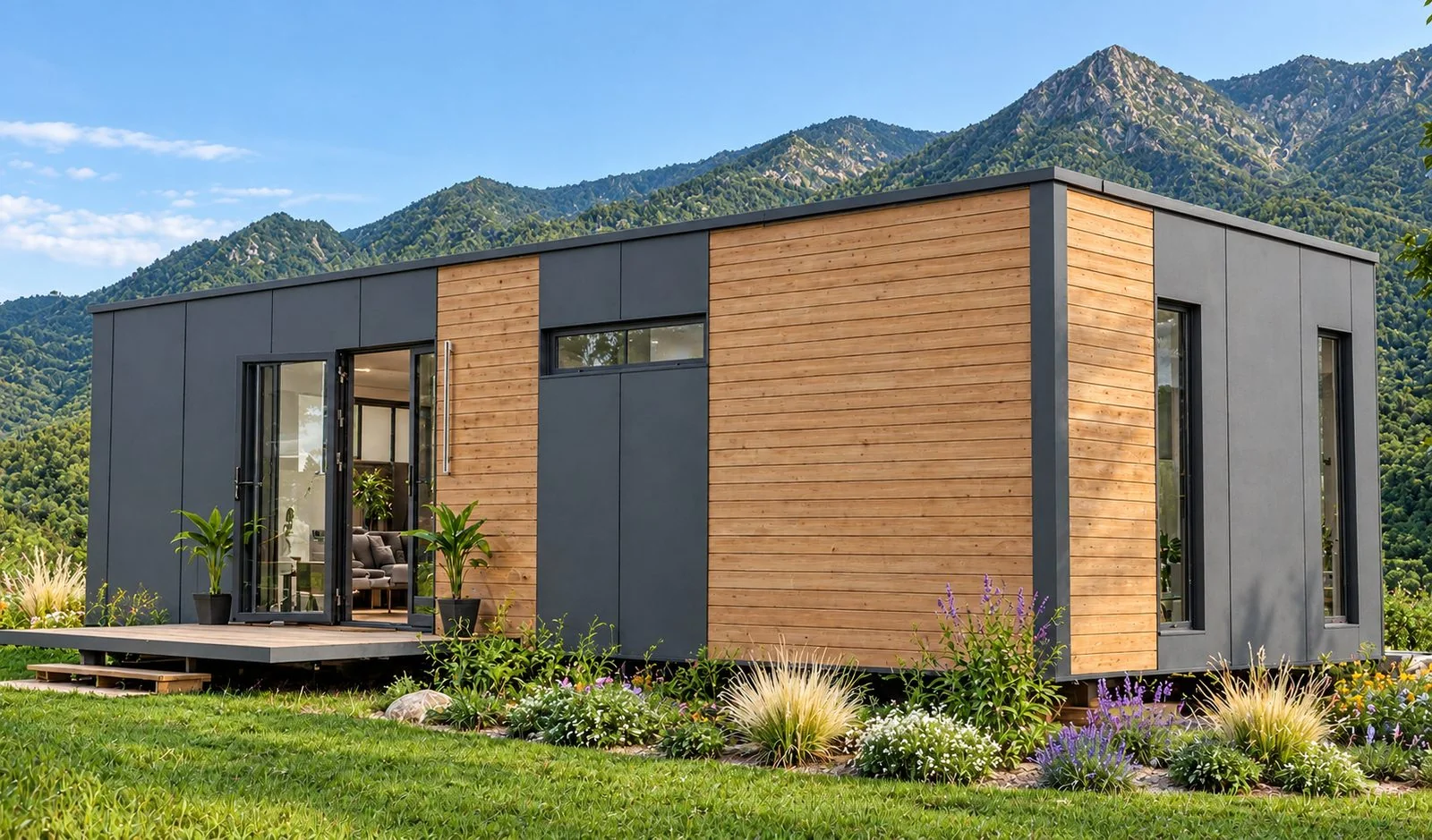
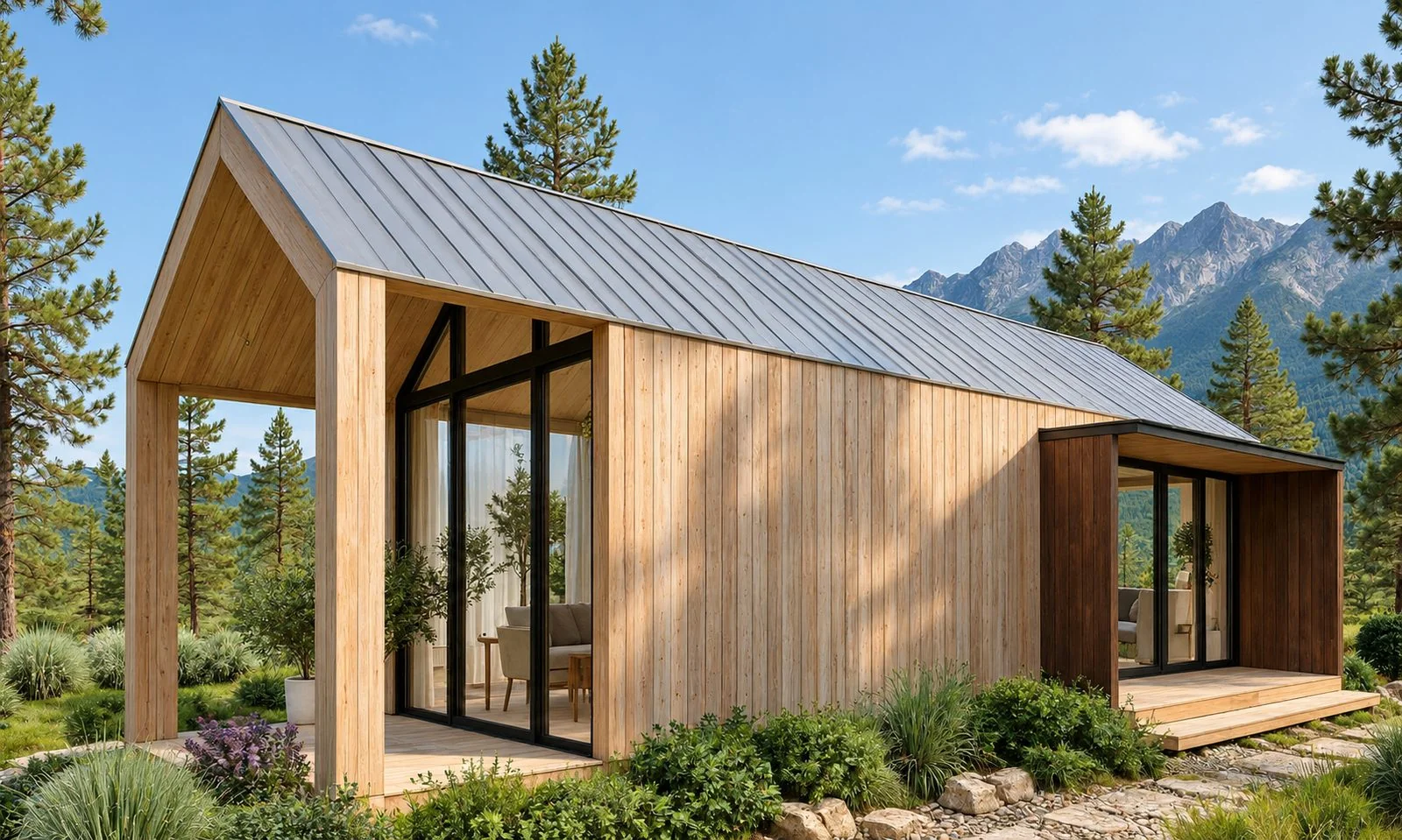
Finally, the modular home is a particular form of prefabricated construction: it is made up of modules, volumes built in a workshop to an almost finished state (structure, insulation, joinery, and often a large share of the interior installations), before being transported and then assembled on the plot. Not every prefabricated building is therefore modular in the strict sense, but every modular home is a form of prefabrication. This distinction, already set out in our article on what a turnkey modular home covers, is the essential starting point for usefully comparing the methods with one another.
What changes in practice is how the building work is organised over time. In traditional construction, almost all of the work takes place on the plot, exposed to the weather and to the coordination hazards between successive trades. In off-site construction, a significant share of the structural work and installations is carried out in the workshop, sheltered from the weather, while in parallel the groundwork (access, foundations or slab if necessary, utility networks) can progress separately on the plot. It is this ability to carry out in parallel steps that, in traditional construction, must follow one another, that most concretely distinguishes the two approaches.
Practical advice
This different organisation does not, however, allow us to conclude that one method is faster, cheaper or of better quality than the other in absolute terms: it depends on the project, the land, the level of customisation sought and the manufacturer or company chosen. The real lead times of a project, whether modular or traditional, depend on factors specific to each project and are given in the quote rather than announced generically. This comparison remains deliberately general: it does not replace a personalised study of your project.
To compare two offers without confusing one method with another, it is better to check what each one actually covers rather than relying solely on the "prefabricated" or "traditional" argument. In both cases, the land, connections to public utility networks and administrative formalities (prior declaration or building permit depending on the surface area) remain fully fledged steps of the project, whatever construction method is chosen for the building itself. Both methods of new construction are also subject to the same environmental requirements, as we explain in our article on what RE2020 changes for housing. Our Maison Collection details, model by model, what is included in a turnkey modular build, and our prices page gives the associated starting prices.